feat:newbee test#13
Conversation


📝 WalkthroughWalkthroughA complete Spring Boot e-commerce platform application is introduced, featuring admin and customer portals with support for product management, order processing, shopping cart functionality, user authentication, and carousel/category indexing via MyBatis ORM and Thymeleaf templating. Changes
Estimated code review effort🎯 5 (Critical) | ⏱️ ~120 minutes Poem
✨ Finishing Touches📝 Generate docstrings
🧪 Generate unit tests (beta)
|
|
@cursor cursor review |

|
You need to increase your spend limit or enable usage-based billing to run background agents. Go to Cursor |
![coderabbitai[bot]](https://avatars.githubusercontent.com/in/347564?s=60&v=4)

There was a problem hiding this comment.
Actionable comments posted: 13
Note
Due to the large number of review comments, Critical severity comments were prioritized as inline comments.
🟡 Minor comments (25)
newbee-mall-master/src/main/java/ltd/newbee/mall/util/PatternUtil.java-19-20 (1)
19-20:⚠️ Potential issue | 🟡 MinorEmail regex TLD length may reject valid addresses.
The regex limits TLDs to 2-6 characters (
[A-Z]{2,6}), but modern TLDs like.technology,.photography, and.internationalexceed this limit. Consider increasing the upper bound or removing it.Suggested fix
     private static final Pattern VALID_EMAIL_ADDRESS_REGEX =
-            Pattern.compile("^[A-Z0-9._%+-]+@[A-Z0-9.-]+\\.[A-Z]{2,6}$", Pattern.CASE_INSENSITIVE);
+            Pattern.compile("^[A-Z0-9._%+-]+@[A-Z0-9.-]+\\.[A-Z]{2,}$", Pattern.CASE_INSENSITIVE);
🤖 Prompt for AI Agents
Verify each finding against the current code and only fix it if needed.

In `@newbee-mall-master/src/main/java/ltd/newbee/mall/util/PatternUtil.java`
around lines 19 - 20, The email validation regex in PatternUtil
(VALID_EMAIL_ADDRESS_REGEX) restricts TLD length to {2,6} which rejects many
valid modern TLDs; update the regex passed to Pattern.compile in
VALID_EMAIL_ADDRESS_REGEX (keep Pattern.CASE_INSENSITIVE) to allow longer
TLDs—for example change the TLD quantifier from {2,6} to a larger upper bound
like {2,63} or to + (e.g. {2,} or +) so domains such as .technology or
.photography are accepted.
newbee-mall-master/src/main/java/ltd/newbee/mall/common/PayTypeEnum.java-16-16 (1)
16-16:⚠️ Potential issue | 🟡 MinorFix JavaDoc wording to match the enum’s purpose.
Line 16 says “订单状态” (order status), but this type is payment type. Please update to avoid confusion in API docs.
🤖 Prompt for AI Agents
Verify each finding against the current code and only fix it if needed.

In `@newbee-mall-master/src/main/java/ltd/newbee/mall/common/PayTypeEnum.java` at
line 16, Update the JavaDoc on PayTypeEnum to describe payment types rather than
order status: change the Chinese phrase “订单状态” to something like “支付类型” and keep
the enumerated values description (0.无 1.支付宝 2.微信支付) so the JavaDoc for the
PayTypeEnum class correctly documents that it represents payment methods.
newbee-mall-master/src/main/java/ltd/newbee/mall/util/PageResult.java-35-41 (1)
35-41:⚠️ Potential issue | 🟡 MinorPotential division by zero.
If
pageSizeis 0, line 40 will cause a division by zero error (ArithmeticExceptionfor integer division orInfinityfor double division). Add validation to guard against invalid input.Proposed fix
     public PageResult(List<?> list, int totalCount, int pageSize, int currPage) {
+        if (pageSize <= 0) {
+            throw new IllegalArgumentException("pageSize must be positive");
+        }
         this.list = list;
         this.totalCount = totalCount;
         this.pageSize = pageSize;
         this.currPage = currPage;
         this.totalPage = (int) Math.ceil((double) totalCount / pageSize);
     }
🤖 Prompt for AI Agents
Verify each finding against the current code and only fix it if needed.

In `@newbee-mall-master/src/main/java/ltd/newbee/mall/util/PageResult.java` around
lines 35 - 41, The PageResult constructor currently computes totalPage with
(int) Math.ceil((double) totalCount / pageSize) which will divide by zero if
pageSize is 0; update the constructor (public PageResult(List<?> list, int
totalCount, int pageSize, int currPage)) to validate pageSize (e.g., if pageSize
<= 0) and handle it safely—either throw an IllegalArgumentException for invalid
pageSize or set totalPage to 0 (and/or normalize pageSize to a safe default)
before computing totalPage—so no division by zero occurs when assigning the
totalPage field.
newbee-mall-master/src/main/java/ltd/newbee/mall/util/PageQueryUtil.java-20-29 (1)
20-29:⚠️ Potential issue | 🟡 MinorMissing null checks and input validation.
The constructor will throw
NullPointerExceptionifpageorlimitkeys are missing fromparams, andNumberFormatExceptionif they are not numeric. Consider adding defensive checks for robustness.Proposed fix
     public PageQueryUtil(Map<String, Object> params) {
         this.putAll(params);

         //分页参数
-        this.page = Integer.parseInt(params.get("page").toString());
-        this.limit = Integer.parseInt(params.get("limit").toString());
+        Object pageObj = params.get("page");
+        Object limitObj = params.get("limit");
+        if (pageObj == null || limitObj == null) {
+            throw new IllegalArgumentException("page and limit parameters are required");
+        }
+        this.page = Integer.parseInt(pageObj.toString());
+        this.limit = Integer.parseInt(limitObj.toString());
+        if (this.page < 1 || this.limit < 1) {
+            throw new IllegalArgumentException("page and limit must be positive");
+        }
         this.put("start", (page - 1) * limit);
         this.put("page", page);
         this.put("limit", limit);
     }
🤖 Prompt for AI Agents
Verify each finding against the current code and only fix it if needed.

In `@newbee-mall-master/src/main/java/ltd/newbee/mall/util/PageQueryUtil.java`
around lines 20 - 29, The PageQueryUtil(Map<String, Object> params) constructor
lacks null and format checks for "page" and "limit"; update the PageQueryUtil
constructor to validate params and the specific keys before parsing: ensure
params is non-null, check params.containsKey("page") and
params.containsKey("limit"), treat missing or empty values by using sensible
defaults (e.g., page=1, limit=10) or throw a clear IllegalArgumentException,
attempt to parse the values with Integer.parseInt inside a try/catch to handle
NumberFormatException and convert non-numeric inputs to defaults or a meaningful
error, then compute and put "start", "page", and "limit" only after successful
validation/parsing so fields page and limit are always valid integers.
newbee-mall-master/src/main/java/ltd/newbee/mall/common/NewBeeMallCategoryLevelEnum.java-34-34 (1)
34-34:⚠️ Potential issue | 🟡 MinorMisleading method name - references "OrderStatus" instead of "CategoryLevel".
The method
getNewBeeMallOrderStatusEnumByLevelshould be namedgetNewBeeMallCategoryLevelEnumByLevelto match the enum it belongs to.Proposed fix
-    public static NewBeeMallCategoryLevelEnum getNewBeeMallOrderStatusEnumByLevel(int level) {
+    public static NewBeeMallCategoryLevelEnum getNewBeeMallCategoryLevelEnumByLevel(int level) {
🤖 Prompt for AI Agents
Verify each finding against the current code and only fix it if needed.

In
`@newbee-mall-master/src/main/java/ltd/newbee/mall/common/NewBeeMallCategoryLevelEnum.java`
at line 34, Rename the misleading method getNewBeeMallOrderStatusEnumByLevel to
getNewBeeMallCategoryLevelEnumByLevel in NewBeeMallCategoryLevelEnum so the name
reflects the enum; update the method declaration and all call sites to the new
name, and adjust any related Javadoc/comments to reference "CategoryLevel"
instead of "OrderStatus" to keep docs consistent.
newbee-mall-master/src/main/java/ltd/newbee/mall/dao/NewBeeMallOrderMapper.java-42-42 (1)
42-42:⚠️ Potential issue | 🟡 MinorInconsistent parameter naming: use
orderIdsinstead ofasList.The parameter name
asListis confusing and inconsistent with other methods in this interface that useorderIds. This can cause mapping issues in the XML mapper if the@Paramvalue doesn't match.✏️ Proposed fix
-    int checkDone(`@Param`("orderIds") List<Long> asList);
+    int checkDone(`@Param`("orderIds") List<Long> orderIds);
🤖 Prompt for AI Agents
Verify each finding against the current code and only fix it if needed.

In
`@newbee-mall-master/src/main/java/ltd/newbee/mall/dao/NewBeeMallOrderMapper.java`
at line 42, The method signature for checkDone uses a confusing parameter name;
change the parameter name from asList to orderIds in the
checkDone(`@Param`("orderIds") List<Long> asList) declaration so the `@Param`
matches the variable and other interface methods; update the parameter
identifier in the method declaration for checkDone to List<Long> orderIds
(keeping `@Param`("orderIds")) so MyBatis XML mappings resolve correctly.
newbee-mall-master/src/main/java/ltd/newbee/mall/common/IndexConfigTypeEnum.java-23-25 (1)
23-25:⚠️ Potential issue | 🟡 MinorTypo and naming inconsistency in enum constants.
INDEX_GOODS_RECOMMONDshould beINDEX_GOODS_RECOMMEND(typo).INDEX_GOODS_HOThas name"INDEX_GOODS_HOTS"(singular constant vs. plural name mismatch).✏️ Proposed fix for naming
-    INDEX_GOODS_HOT(3, "INDEX_GOODS_HOTS"),
+    INDEX_GOODS_HOT(3, "INDEX_GOODS_HOT"),
     INDEX_GOODS_NEW(4, "INDEX_GOODS_NEW"),
-    INDEX_GOODS_RECOMMOND(5, "INDEX_GOODS_RECOMMOND");
+    INDEX_GOODS_RECOMMEND(5, "INDEX_GOODS_RECOMMEND");
🤖 Prompt for AI Agents
Verify each finding against the current code and only fix it if needed.

In
`@newbee-mall-master/src/main/java/ltd/newbee/mall/common/IndexConfigTypeEnum.java`
around lines 23 - 25, Fix typos and naming inconsistency in IndexConfigTypeEnum:
rename the enum constant INDEX_GOODS_RECOMMOND to INDEX_GOODS_RECOMMEND and
change its associated string literal to "INDEX_GOODS_RECOMMEND"; for
INDEX_GOODS_HOT, make the associated string literal match the constant (change
"INDEX_GOODS_HOTS" to "INDEX_GOODS_HOT"). Update any references/usages of
INDEX_GOODS_RECOMMOND to the new name to avoid compilation errors.
newbee-mall-master/docs/API.md-909-923 (1)
909-923:⚠️ Potential issue | 🟡 MinorFix markdown heading hierarchy and code block language.
Two issues flagged by static analysis:
- Line 911: Heading jumps from h2 (
## 公共接口) to h4 (#### 42.). Should use h3 (### 42.) for consistency.- Line 920: Code block lacks a language specifier.
📝 Proposed fix
 ## 公共接口

-#### 42. 获取验证码
+### 42. 获取验证码

 **接口地址**: `GET /common/kaptcha`

 **接口描述**: 生成验证码图片

 **请求参数**: 无

 **响应数据**:
-```
+```text
 图片流(image/jpeg)
-#### 43. 文件上传
+### 43. 文件上传</details> <details> <summary>🤖 Prompt for AI Agents</summary>Verify each finding against the current code and only fix it if needed.
In
@newbee-mall-master/docs/API.mdaround lines 909 - 923, Update the markdown
under the "公共接口" section: change the heading "#### 42. 获取验证码" to "### 42. 获取验证码"
to restore proper H2→H3 hierarchy, and add a language specifier to the response
code block (e.g., replace the triple-backtick fence with one that includes a
language like "text" or "http") so the response example displays correctly; also
ensure the next heading ("#### 43. 文件上传") is promoted to "### 43. 文件上传" to keep
consistent heading levels.</details> </blockquote></details> <details> <summary>newbee-mall-master/src/main/java/ltd/newbee/mall/controller/common/UploadController.java-68-72 (1)</summary><blockquote> `68-72`: _⚠️ Potential issue_ | _🟡 Minor_ **Use `mkdirs()` instead of `mkdir()` to create parent directories.** `mkdir()` fails silently if parent directories don't exist. Using `mkdirs()` ensures the full directory path is created. <details> <summary>🐛 Proposed fix</summary> ```diff if (!fileDirectory.exists()) { - if (!fileDirectory.mkdir()) { + if (!fileDirectory.mkdirs()) { throw new IOException("文件夹创建失败,路径为:" + fileDirectory); } }🤖 Prompt for AI Agents
Verify each finding against the current code and only fix it if needed.

In
`@newbee-mall-master/src/main/java/ltd/newbee/mall/controller/common/UploadController.java`
around lines 68 - 72, The directory creation logic in UploadController.java uses
fileDirectory.mkdir() which fails when parent directories are missing; replace
the mkdir() call with fileDirectory.mkdirs() and keep the same existence check
and IOException on false so the full directory path (including parents) is
created reliably, referencing the fileDirectory variable in the method where the
current mkdir() check is performed.
newbee-mall-master/README.md-32-32 (1)
32-32:⚠️ Potential issue | 🟡 MinorAdd alt text to image for accessibility.
The image is missing descriptive alt text, which impacts accessibility for screen reader users. Static analysis flagged this as MD045 (no-alt-text).
📝 Suggested fix
-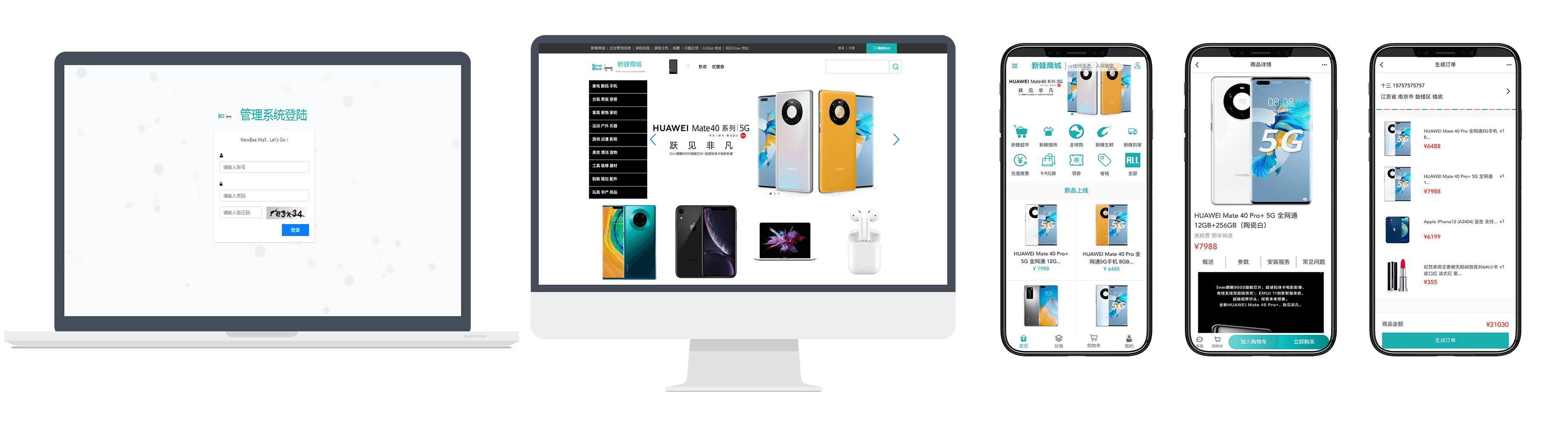 +🤖 Prompt for AI Agents
Verify each finding against the current code and only fix it if needed. In `@newbee-mall-master/README.md` at line 32, The image markdown "" in README.md lacks alt text; update that markdown to include a concise, descriptive alt attribute (e.g., replace "" with "") so screen readers have meaningful content and MD045 is resolved.newbee-mall-master/README.md-124-124 (1)
124-124:⚠️ Potential issue | 🟡 MinorAdd alt text to image for accessibility.
Same issue as above—this image lacks descriptive alt text. Static analysis flagged this as MD045 (no-alt-text).
📝 Suggested fix
- +🤖 Prompt for AI Agents
Verify each finding against the current code and only fix it if needed. In `@newbee-mall-master/README.md` at line 124, The Markdown image tag "" is missing alt text (MD045); update the tag to include a concise, descriptive alt string (e.g., replace "" with "" or another accurate description) so screen readers and static analysis have accessible text.newbee-mall-master/src/main/java/ltd/newbee/mall/interceptor/NewBeeMallLoginInterceptor.java-30-38 (1)
30-38:⚠️ Potential issue | 🟡 MinorAvoid creating unnecessary sessions for unauthenticated requests.
request.getSession()on line 32 creates a new session if one doesn't exist. For unauthenticated users, this creates unnecessary session overhead. UsegetSession(false)to check for an existing session without creating one.🔧 Proposed fix
     `@Override`
     public boolean preHandle(HttpServletRequest request, HttpServletResponse response, Object o) throws Exception {
-        if (null == request.getSession().getAttribute(Constants.MALL_USER_SESSION_KEY)) {
+        if (null == request.getSession(false) || null == request.getSession(false).getAttribute(Constants.MALL_USER_SESSION_KEY)) {
             response.sendRedirect(request.getContextPath() + "/login");
             return false;
         } else {
             return true;
         }
     }
🤖 Prompt for AI Agents
Verify each finding against the current code and only fix it if needed.

In
`@newbee-mall-master/src/main/java/ltd/newbee/mall/interceptor/NewBeeMallLoginInterceptor.java`
around lines 30 - 38, In NewBeeMallLoginInterceptor.preHandle replace the call
to request.getSession() with request.getSession(false) and treat a null session
the same as a missing Constants.MALL_USER_SESSION_KEY attribute; i.e., check if
request.getSession(false) is null OR
session.getAttribute(Constants.MALL_USER_SESSION_KEY) is null and then call
response.sendRedirect(request.getContextPath() + "/login") and return false,
otherwise return true.
newbee-mall-master/src/main/java/ltd/newbee/mall/controller/mall/GoodsController.java-61-63 (1)
61-63:⚠️ Potential issue | 🟡 MinorTrim
keywordbefore storing and querying.Lines 61-63 state whitespace filtering intent, but Line 62 assigns the untrimmed value.
Proposed fix
         if (params.containsKey("keyword") && StringUtils.hasText((params.get("keyword") + "").trim())) {
-            keyword = params.get("keyword") + "";
+            keyword = String.valueOf(params.get("keyword")).trim();
         }
🤖 Prompt for AI Agents
Verify each finding against the current code and only fix it if needed.

In
`@newbee-mall-master/src/main/java/ltd/newbee/mall/controller/mall/GoodsController.java`
around lines 61 - 63, The keyword value is checked for non-whitespace but
assigned without trimming; update the assignment in GoodsController (the block
that checks params.containsKey("keyword") and uses StringUtils.hasText) to store
the trimmed string (e.g., call trim() on params.get("keyword")+"") so all
subsequent querying uses the trimmed keyword.
newbee-mall-master/src/main/java/ltd/newbee/mall/controller/admin/NewBeeMallGoodsIndexConfigController.java-123-126 (1)
123-126:⚠️ Potential issue | 🟡 MinorGuard the delete payload against
null.A
nullrequest body reachesids.lengthand turns a validation failure into a 500.🛡️ Suggested change
-        if (ids.length < 1) {
+        if (ids == null || ids.length < 1) {
             return ResultGenerator.genFailResult("参数异常!");
         }
🤖 Prompt for AI Agents
Verify each finding against the current code and only fix it if needed.

In
`@newbee-mall-master/src/main/java/ltd/newbee/mall/controller/admin/NewBeeMallGoodsIndexConfigController.java`
around lines 123 - 126, The delete method in
NewBeeMallGoodsIndexConfigController currently assumes the `@RequestBody` Long[]
ids is non-null and uses ids.length, causing NPEs; update the
delete(`@RequestBody` Long[] ids) handler to first check for ids == null (and
treat empty similarly) and return a proper validation Result (e.g., bad request
or validation failure) when ids is null or has zero length before accessing
ids.length or processing deletion logic so the controller returns a 4xx instead
of throwing a 500.
newbee-mall-master/src/main/java/ltd/newbee/mall/controller/admin/NewBeeMallOrderController.java-101-104 (1)
101-104:⚠️ Potential issue | 🟡 MinorMissing null check for
idsarrays in batch operations.The
checkDone,checkOut, andcloseOrdermethods checkids.length < 1but don't guard againstnullarrays, which would cause an NPE.Proposed fix for checkDone (apply similarly to others)
     public Result checkDone(`@RequestBody` Long[] ids) {
-        if (ids.length < 1) {
+        if (ids == null || ids.length < 1) {
             return ResultGenerator.genFailResult("参数异常!");
         }
Also applies to: 118-121, 135-138
🤖 Prompt for AI Agents
Verify each finding against the current code and only fix it if needed.

In
`@newbee-mall-master/src/main/java/ltd/newbee/mall/controller/admin/NewBeeMallOrderController.java`
around lines 101 - 104, The methods checkDone, checkOut, and closeOrder
currently call ids.length without guarding for null; update each method
(checkDone, checkOut, closeOrder) to first verify the request body array is
non-null and non-empty (e.g., if (ids == null || ids.length < 1) return
ResultGenerator.genFailResult(...)) so a null ids array won't cause an NPE
before proceeding with the batch operation.
newbee-mall-master/src/main/java/ltd/newbee/mall/service/impl/NewBeeMallIndexConfigServiceImpl.java-113-120 (1)
113-120:⚠️ Potential issue | 🟡 MinorMissing null check for
idsarray indeleteBatch.Same pattern as other files - checking
ids.length < 1without guarding againstnull.Proposed fix
     `@Override`
     public Boolean deleteBatch(Long[] ids) {
-        if (ids.length < 1) {
+        if (ids == null || ids.length < 1) {
             return false;
         }
🤖 Prompt for AI Agents
Verify each finding against the current code and only fix it if needed.

In
`@newbee-mall-master/src/main/java/ltd/newbee/mall/service/impl/NewBeeMallIndexConfigServiceImpl.java`
around lines 113 - 120, The deleteBatch method lacks a null guard for the ids
parameter which can cause a NullPointerException; update the
NewBeeMallIndexConfigServiceImpl.deleteBatch method to first check if ids ==
null || ids.length < 1 and return false in that case before calling
indexConfigMapper.deleteBatch(ids), keeping the existing return semantics
(return indexConfigMapper.deleteBatch(ids) > 0).
newbee-mall-master/src/main/java/ltd/newbee/mall/service/impl/NewBeeMallUserServiceImpl.java-100-106 (1)
100-106:⚠️ Potential issue | 🟡 MinorMissing null check for
idsarray.If
idsisnull, accessingids.lengthwill throw aNullPointerException.Proposed fix
     `@Override`
     public Boolean lockUsers(Integer[] ids, int lockStatus) {
-        if (ids.length < 1) {
+        if (ids == null || ids.length < 1) {
             return false;
         }
         return mallUserMapper.lockUserBatch(ids, lockStatus) > 0;
     }
🤖 Prompt for AI Agents
Verify each finding against the current code and only fix it if needed.

In
`@newbee-mall-master/src/main/java/ltd/newbee/mall/service/impl/NewBeeMallUserServiceImpl.java`
around lines 100 - 106, The lockUsers method lacks a null check for the ids
parameter causing a NullPointerException when ids is null; update the method
(lockUsers in NewBeeMallUserServiceImpl) to first verify ids is not null and not
empty (e.g., if (ids == null || ids.length < 1) return false) before calling
mallUserMapper.lockUserBatch(ids, lockStatus) so the mapper is only invoked with
a valid array.
newbee-mall-master/src/main/java/ltd/newbee/mall/service/impl/NewBeeMallGoodsServiceImpl.java-109-112 (1)
109-112:⚠️ Potential issue | 🟡 MinorMissing validation for
idsarray inbatchUpdateSellStatus.Unlike other batch operations in this codebase, this method doesn't validate that
idsis non-null and non-empty before calling the mapper.Proposed fix
     `@Override`
     public Boolean batchUpdateSellStatus(Long[] ids, int sellStatus) {
+        if (ids == null || ids.length < 1) {
+            return false;
+        }
         return goodsMapper.batchUpdateSellStatus(ids, sellStatus) > 0;
     }
🤖 Prompt for AI Agents
Verify each finding against the current code and only fix it if needed.

In
`@newbee-mall-master/src/main/java/ltd/newbee/mall/service/impl/NewBeeMallGoodsServiceImpl.java`
around lines 109 - 112, batchUpdateSellStatus currently calls
goodsMapper.batchUpdateSellStatus without validating the ids array; add a guard
in NewBeeMallGoodsServiceImpl.batchUpdateSellStatus to return false if ids is
null or ids.length == 0, then proceed to call
goodsMapper.batchUpdateSellStatus(ids, sellStatus) and return the >0 result—this
mirrors other batch operations and prevents NPEs or unintended mapper calls.
newbee-mall-master/src/main/java/ltd/newbee/mall/service/impl/NewBeeMallGoodsServiceImpl.java-121-133 (1)
121-133:⚠️ Potential issue | 🟡 MinorPotential NullPointerException when truncating
goodsNameorgoodsIntro.Same issue as in
NewBeeMallIndexConfigServiceImpl- if these fields arenull, calling.length()will throw an NPE.Proposed fix
                 for (NewBeeMallSearchGoodsVO newBeeMallSearchGoodsVO : newBeeMallSearchGoodsVOS) {
                     String goodsName = newBeeMallSearchGoodsVO.getGoodsName();
                     String goodsIntro = newBeeMallSearchGoodsVO.getGoodsIntro();
                     // 字符串过长导致文字超出的问题
-                    if (goodsName.length() > 28) {
+                    if (goodsName != null && goodsName.length() > 28) {
                         goodsName = goodsName.substring(0, 28) + "...";
                         newBeeMallSearchGoodsVO.setGoodsName(goodsName);
                     }
-                    if (goodsIntro.length() > 30) {
+                    if (goodsIntro != null && goodsIntro.length() > 30) {
                         goodsIntro = goodsIntro.substring(0, 30) + "...";
                         newBeeMallSearchGoodsVO.setGoodsIntro(goodsIntro);
                     }
                 }
🤖 Prompt for AI Agents
Verify each finding against the current code and only fix it if needed.

In
`@newbee-mall-master/src/main/java/ltd/newbee/mall/service/impl/NewBeeMallGoodsServiceImpl.java`
around lines 121 - 133, The loop in NewBeeMallGoodsServiceImpl iterates
newBeeMallSearchGoodsVOS and calls goodsName.length() and goodsIntro.length()
which can throw NPE if either field is null; update the loop that processes
NewBeeMallSearchGoodsVO instances to null-safe truncate by checking for null
(e.g., if (goodsName != null && goodsName.length() > 28) and similarly for
goodsIntro) or using a utility method like StringUtils.hasLength/hasText before
substring, then call setGoodsName/setGoodsIntro only after those checks to avoid
NullPointerException.
newbee-mall-master/src/main/java/ltd/newbee/mall/controller/mall/PersonalController.java-52-55 (1)
52-55:⚠️ Potential issue | 🟡 MinorSame issue with
register.htmlmapping.Apply the same fix for consistency.
Proposed fix
-    `@GetMapping`({"/register", "register.html"})
+    `@GetMapping`({"/register", "/register.html"})
     public String registerPage() {
         return "mall/register";
     }
🤖 Prompt for AI Agents
Verify each finding against the current code and only fix it if needed.

In
`@newbee-mall-master/src/main/java/ltd/newbee/mall/controller/mall/PersonalController.java`
around lines 52 - 55, The `@GetMapping` on registerPage currently uses
{"/register", "register.html"} which is inconsistent with other mappings; update
the annotation to include a leading slash for the HTML path so it reads
`@GetMapping`({"/register", "/register.html"}) on the registerPage method to
mirror the pattern used elsewhere and ensure correct URL matching.
newbee-mall-master/src/main/resources/mapper/CarouselMapper.xml-33-38 (1)
33-38:⚠️ Potential issue | 🟡 Minor
selectByPrimaryKeydoes not filter soft-deleted records.Other queries (
findCarouselList,getTotalCarousels,findCarouselsByNum) consistently filter withis_deleted = 0, butselectByPrimaryKeyreturns the record regardless of deletion status. This could cause issues when fetching a carousel that was soft-deleted.Proposed fix
     <select id="selectByPrimaryKey" parameterType="java.lang.Integer" resultMap="BaseResultMap">
         select
         <include refid="Base_Column_List"/>
         from tb_newbee_mall_carousel
-        where carousel_id = #{carouselId,jdbcType=INTEGER}
+        where carousel_id = #{carouselId,jdbcType=INTEGER} and is_deleted = 0
     </select>
🤖 Prompt for AI Agents
Verify each finding against the current code and only fix it if needed.

In `@newbee-mall-master/src/main/resources/mapper/CarouselMapper.xml` around lines
33 - 38, selectByPrimaryKey currently returns records regardless of soft-delete
flag; modify the SQL in the selectByPrimaryKey mapper (id="selectByPrimaryKey")
to only return non-deleted rows by adding "and is_deleted = 0" to the WHERE
clause (i.e., change "where carousel_id = #{carouselId,jdbcType=INTEGER}" to
"where carousel_id = #{carouselId,jdbcType=INTEGER} and is_deleted = 0") so it
matches the behavior of findCarouselList/getTotalCarousels/findCarouselsByNum.
newbee-mall-master/src/main/java/ltd/newbee/mall/controller/mall/PersonalController.java-47-50 (1)
47-50:⚠️ Potential issue | 🟡 MinorPotentially incorrect path mapping for
login.html.The mapping
"login.html"(without a leading/) may not behave as expected. It would match relative paths rather than absolute paths from the context root. Consider using"/login.html"instead.Proposed fix
-    `@GetMapping`({"/login", "login.html"})
+    `@GetMapping`({"/login", "/login.html"})
     public String loginPage() {
         return "mall/login";
     }
🤖 Prompt for AI Agents
Verify each finding against the current code and only fix it if needed.

In
`@newbee-mall-master/src/main/java/ltd/newbee/mall/controller/mall/PersonalController.java`
around lines 47 - 50, The `@GetMapping` on method loginPage currently includes
"login.html" which is a relative path; change the mapping to use an absolute
path by replacing "login.html" with "/login.html" in the annotation on loginPage
so the controller maps from the context root (i.e., update the `@GetMapping` on
loginPage to {`@GetMapping`({"/login", "/login.html"})} or equivalent).
newbee-mall-master/src/main/java/ltd/newbee/mall/service/impl/NewBeeMallIndexConfigServiceImpl.java-96-108 (1)
96-108:⚠️ Potential issue | 🟡 MinorPotential NullPointerException when truncating
goodsNameorgoodsIntro.If
goodsNameorgoodsIntroisnull, calling.length()will throw an NPE. Add null checks before accessing these properties.Proposed fix
             for (NewBeeMallIndexConfigGoodsVO newBeeMallIndexConfigGoodsVO : newBeeMallIndexConfigGoodsVOS) {
                 String goodsName = newBeeMallIndexConfigGoodsVO.getGoodsName();
                 String goodsIntro = newBeeMallIndexConfigGoodsVO.getGoodsIntro();
                 // 字符串过长导致文字超出的问题
-                if (goodsName.length() > 30) {
+                if (goodsName != null && goodsName.length() > 30) {
                     goodsName = goodsName.substring(0, 30) + "...";
                     newBeeMallIndexConfigGoodsVO.setGoodsName(goodsName);
                 }
-                if (goodsIntro.length() > 22) {
+                if (goodsIntro != null && goodsIntro.length() > 22) {
                     goodsIntro = goodsIntro.substring(0, 22) + "...";
                     newBeeMallIndexConfigGoodsVO.setGoodsIntro(goodsIntro);
                 }
             }
🤖 Prompt for AI Agents
Verify each finding against the current code and only fix it if needed.

In
`@newbee-mall-master/src/main/java/ltd/newbee/mall/service/impl/NewBeeMallIndexConfigServiceImpl.java`
around lines 96 - 108, The loop truncating product strings can throw
NullPointerException because getGoodsName() or getGoodsIntro() may be null;
update the loop over newBeeMallIndexConfigGoodsVOS in
NewBeeMallIndexConfigServiceImpl to first retrieve names into local variables,
check for null (e.g., if (goodsName != null && goodsName.length() > 30)) before
calling length() or substring(), and only call setGoodsName/setGoodsIntro when a
non-null value is truncated (or leave nulls untouched) to avoid NPEs while
preserving current trimming behavior for NewBeeMallIndexConfigGoodsVO.
newbee-mall-master/src/main/java/ltd/newbee/mall/service/impl/NewBeeMallUserServiceImpl.java-77-79 (1)
77-79:⚠️ Potential issue | 🟡 MinorPotential NullPointerException if session user is missing.
If
httpSession.getAttribute(Constants.MALL_USER_SESSION_KEY)returnsnull, the subsequent call touserTemp.getUserId()will throw an NPE. Add a null check or return early.Proposed fix
     `@Override`
     public NewBeeMallUserVO updateUserInfo(MallUser mallUser, HttpSession httpSession) {
         NewBeeMallUserVO userTemp = (NewBeeMallUserVO) httpSession.getAttribute(Constants.MALL_USER_SESSION_KEY);
+        if (userTemp == null) {
+            return null;
+        }
         MallUser userFromDB = mallUserMapper.selectByPrimaryKey(userTemp.getUserId());
🤖 Prompt for AI Agents
Verify each finding against the current code and only fix it if needed.

In
`@newbee-mall-master/src/main/java/ltd/newbee/mall/service/impl/NewBeeMallUserServiceImpl.java`
around lines 77 - 79, In updateUserInfo, guard against a null session user by
checking the result of httpSession.getAttribute(Constants.MALL_USER_SESSION_KEY)
before casting to NewBeeMallUserVO; if userTemp is null return early (or throw a
clear IllegalStateException) instead of calling userTemp.getUserId(), then
proceed to call mallUserMapper.selectByPrimaryKey(userTemp.getUserId()) only
when userTemp is non-null and optionally log the missing session case for
debugging.
newbee-mall-master/src/main/resources/mapper/IndexConfigMapper.xml-60-65 (1)
60-65:⚠️ Potential issue | 🟡 MinorFix
configTypeJDBC type mismatch inselectByTypeAndGoodsId.Line 64 binds
configTypeasBIGINT, while the mapper definesconfig_typeasTINYINT(Line 7/167/199). This inconsistency can cause implicit casts and unstable query behavior.💡 Proposed fix
-        where config_type = #{configType,jdbcType=BIGINT} and goods_id=#{goodsId,jdbcType=BIGINT} and is_deleted=0 limit 1
+        where config_type = #{configType,jdbcType=TINYINT} and goods_id=#{goodsId,jdbcType=BIGINT} and is_deleted=0 limit 1
🤖 Prompt for AI Agents
Verify each finding against the current code and only fix it if needed.

In `@newbee-mall-master/src/main/resources/mapper/IndexConfigMapper.xml` around
lines 60 - 65, The selectByTypeAndGoodsId mapper binds configType as BIGINT but
the column config_type is defined as TINYINT; update the parameter JDBC type for
configType in the selectByTypeAndGoodsId statement to jdbcType=TINYINT so it
matches the column definition (keep goodsId as jdbcType=BIGINT) and ensure the
parameter name configType remains unchanged.
| GNU GENERAL PUBLIC LICENSE | ||
| Version 3, 29 June 2007 | ||
|
|
||
| Copyright (C) 2007 Free Software Foundation, Inc. <https://fsf.org/> | ||
| Everyone is permitted to copy and distribute verbatim copies | ||
| of this license document, but changing it is not allowed. | ||
|
|
||
| Preamble | ||
|
|
||
| The GNU General Public License is a free, copyleft license for | ||
| software and other kinds of works. | ||
|
|
||
| The licenses for most software and other practical works are designed | ||
| to take away your freedom to share and change the works. By contrast, | ||
| the GNU General Public License is intended to guarantee your freedom to | ||
| share and change all versions of a program--to make sure it remains free | ||
| software for all its users. We, the Free Software Foundation, use the | ||
| GNU General Public License for most of our software; it applies also to | ||
| any other work released this way by its authors. You can apply it to | ||
| your programs, too. | ||
|
|
||
| When we speak of free software, we are referring to freedom, not | ||
| price. Our General Public Licenses are designed to make sure that you | ||
| have the freedom to distribute copies of free software (and charge for | ||
| them if you wish), that you receive source code or can get it if you | ||
| want it, that you can change the software or use pieces of it in new | ||
| free programs, and that you know you can do these things. | ||
|
|
||
| To protect your rights, we need to prevent others from denying you | ||
| these rights or asking you to surrender the rights. Therefore, you have | ||
| certain responsibilities if you distribute copies of the software, or if | ||
| you modify it: responsibilities to respect the freedom of others. | ||
|
|
||
| For example, if you distribute copies of such a program, whether | ||
| gratis or for a fee, you must pass on to the recipients the same | ||
| freedoms that you received. You must make sure that they, too, receive | ||
| or can get the source code. And you must show them these terms so they | ||
| know their rights. | ||
|
|
||
| Developers that use the GNU GPL protect your rights with two steps: | ||
| (1) assert copyright on the software, and (2) offer you this License | ||
| giving you legal permission to copy, distribute and/or modify it. | ||
|
|
||
| For the developers' and authors' protection, the GPL clearly explains | ||
| that there is no warranty for this free software. For both users' and | ||
| authors' sake, the GPL requires that modified versions be marked as | ||
| changed, so that their problems will not be attributed erroneously to | ||
| authors of previous versions. | ||
|
|
||
| Some devices are designed to deny users access to install or run | ||
| modified versions of the software inside them, although the manufacturer | ||
| can do so. This is fundamentally incompatible with the aim of | ||
| protecting users' freedom to change the software. The systematic | ||
| pattern of such abuse occurs in the area of products for individuals to | ||
| use, which is precisely where it is most unacceptable. Therefore, we | ||
| have designed this version of the GPL to prohibit the practice for those | ||
| products. If such problems arise substantially in other domains, we | ||
| stand ready to extend this provision to those domains in future versions | ||
| of the GPL, as needed to protect the freedom of users. | ||
|
|
||
| Finally, every program is threatened constantly by software patents. | ||
| States should not allow patents to restrict development and use of | ||
| software on general-purpose computers, but in those that do, we wish to | ||
| avoid the special danger that patents applied to a free program could | ||
| make it effectively proprietary. To prevent this, the GPL assures that | ||
| patents cannot be used to render the program non-free. | ||
|
|
||
| The precise terms and conditions for copying, distribution and | ||
| modification follow. | ||
|
|
||
| TERMS AND CONDITIONS | ||
|
|
||
| 0. Definitions. | ||
|
|
||
| "This License" refers to version 3 of the GNU General Public License. | ||
|
|
||
| "Copyright" also means copyright-like laws that apply to other kinds of | ||
| works, such as semiconductor masks. | ||
|
|
||
| "The Program" refers to any copyrightable work licensed under this | ||
| License. Each licensee is addressed as "you". "Licensees" and | ||
| "recipients" may be individuals or organizations. | ||
|
|
||
| To "modify" a work means to copy from or adapt all or part of the work | ||
| in a fashion requiring copyright permission, other than the making of an | ||
| exact copy. The resulting work is called a "modified version" of the | ||
| earlier work or a work "based on" the earlier work. | ||
|
|
||
| A "covered work" means either the unmodified Program or a work based | ||
| on the Program. | ||
|
|
||
| To "propagate" a work means to do anything with it that, without | ||
| permission, would make you directly or secondarily liable for | ||
| infringement under applicable copyright law, except executing it on a | ||
| computer or modifying a private copy. Propagation includes copying, | ||
| distribution (with or without modification), making available to the | ||
| public, and in some countries other activities as well. | ||
|
|
||
| To "convey" a work means any kind of propagation that enables other | ||
| parties to make or receive copies. Mere interaction with a user through | ||
| a computer network, with no transfer of a copy, is not conveying. | ||
|
|
||
| An interactive user interface displays "Appropriate Legal Notices" | ||
| to the extent that it includes a convenient and prominently visible | ||
| feature that (1) displays an appropriate copyright notice, and (2) | ||
| tells the user that there is no warranty for the work (except to the | ||
| extent that warranties are provided), that licensees may convey the | ||
| work under this License, and how to view a copy of this License. If | ||
| the interface presents a list of user commands or options, such as a | ||
| menu, a prominent item in the list meets this criterion. | ||
|
|
||
| 1. Source Code. | ||
|
|
||
| The "source code" for a work means the preferred form of the work | ||
| for making modifications to it. "Object code" means any non-source | ||
| form of a work. | ||
|
|
||
| A "Standard Interface" means an interface that either is an official | ||
| standard defined by a recognized standards body, or, in the case of | ||
| interfaces specified for a particular programming language, one that | ||
| is widely used among developers working in that language. | ||
|
|
||
| The "System Libraries" of an executable work include anything, other | ||
| than the work as a whole, that (a) is included in the normal form of | ||
| packaging a Major Component, but which is not part of that Major | ||
| Component, and (b) serves only to enable use of the work with that | ||
| Major Component, or to implement a Standard Interface for which an | ||
| implementation is available to the public in source code form. A | ||
| "Major Component", in this context, means a major essential component | ||
| (kernel, window system, and so on) of the specific operating system | ||
| (if any) on which the executable work runs, or a compiler used to | ||
| produce the work, or an object code interpreter used to run it. | ||
|
|
||
| The "Corresponding Source" for a work in object code form means all | ||
| the source code needed to generate, install, and (for an executable | ||
| work) run the object code and to modify the work, including scripts to | ||
| control those activities. However, it does not include the work's | ||
| System Libraries, or general-purpose tools or generally available free | ||
| programs which are used unmodified in performing those activities but | ||
| which are not part of the work. For example, Corresponding Source | ||
| includes interface definition files associated with source files for | ||
| the work, and the source code for shared libraries and dynamically | ||
| linked subprograms that the work is specifically designed to require, | ||
| such as by intimate data communication or control flow between those | ||
| subprograms and other parts of the work. | ||
|
|
||
| The Corresponding Source need not include anything that users | ||
| can regenerate automatically from other parts of the Corresponding | ||
| Source. | ||
|
|
||
| The Corresponding Source for a work in source code form is that | ||
| same work. | ||
|
|
||
| 2. Basic Permissions. | ||
|
|
||
| All rights granted under this License are granted for the term of | ||
| copyright on the Program, and are irrevocable provided the stated | ||
| conditions are met. This License explicitly affirms your unlimited | ||
| permission to run the unmodified Program. The output from running a | ||
| covered work is covered by this License only if the output, given its | ||
| content, constitutes a covered work. This License acknowledges your | ||
| rights of fair use or other equivalent, as provided by copyright law. | ||
|
|
||
| You may make, run and propagate covered works that you do not | ||
| convey, without conditions so long as your license otherwise remains | ||
| in force. You may convey covered works to others for the sole purpose | ||
| of having them make modifications exclusively for you, or provide you | ||
| with facilities for running those works, provided that you comply with | ||
| the terms of this License in conveying all material for which you do | ||
| not control copyright. Those thus making or running the covered works | ||
| for you must do so exclusively on your behalf, under your direction | ||
| and control, on terms that prohibit them from making any copies of | ||
| your copyrighted material outside their relationship with you. | ||
|
|
||
| Conveying under any other circumstances is permitted solely under | ||
| the conditions stated below. Sublicensing is not allowed; section 10 | ||
| makes it unnecessary. | ||
|
|
||
| 3. Protecting Users' Legal Rights From Anti-Circumvention Law. | ||
|
|
||
| No covered work shall be deemed part of an effective technological | ||
| measure under any applicable law fulfilling obligations under article | ||
| 11 of the WIPO copyright treaty adopted on 20 December 1996, or | ||
| similar laws prohibiting or restricting circumvention of such | ||
| measures. | ||
|
|
||
| When you convey a covered work, you waive any legal power to forbid | ||
| circumvention of technological measures to the extent such circumvention | ||
| is effected by exercising rights under this License with respect to | ||
| the covered work, and you disclaim any intention to limit operation or | ||
| modification of the work as a means of enforcing, against the work's | ||
| users, your or third parties' legal rights to forbid circumvention of | ||
| technological measures. | ||
|
|
||
| 4. Conveying Verbatim Copies. | ||
|
|
||
| You may convey verbatim copies of the Program's source code as you | ||
| receive it, in any medium, provided that you conspicuously and | ||
| appropriately publish on each copy an appropriate copyright notice; | ||
| keep intact all notices stating that this License and any | ||
| non-permissive terms added in accord with section 7 apply to the code; | ||
| keep intact all notices of the absence of any warranty; and give all | ||
| recipients a copy of this License along with the Program. | ||
|
|
||
| You may charge any price or no price for each copy that you convey, | ||
| and you may offer support or warranty protection for a fee. | ||
|
|
||
| 5. Conveying Modified Source Versions. | ||
|
|
||
| You may convey a work based on the Program, or the modifications to | ||
| produce it from the Program, in the form of source code under the | ||
| terms of section 4, provided that you also meet all of these conditions: | ||
|
|
||
| a) The work must carry prominent notices stating that you modified | ||
| it, and giving a relevant date. | ||
|
|
||
| b) The work must carry prominent notices stating that it is | ||
| released under this License and any conditions added under section | ||
| 7. This requirement modifies the requirement in section 4 to | ||
| "keep intact all notices". | ||
|
|
||
| c) You must license the entire work, as a whole, under this | ||
| License to anyone who comes into possession of a copy. This | ||
| License will therefore apply, along with any applicable section 7 | ||
| additional terms, to the whole of the work, and all its parts, | ||
| regardless of how they are packaged. This License gives no | ||
| permission to license the work in any other way, but it does not | ||
| invalidate such permission if you have separately received it. | ||
|
|
||
| d) If the work has interactive user interfaces, each must display | ||
| Appropriate Legal Notices; however, if the Program has interactive | ||
| interfaces that do not display Appropriate Legal Notices, your | ||
| work need not make them do so. | ||
|
|
||
| A compilation of a covered work with other separate and independent | ||
| works, which are not by their nature extensions of the covered work, | ||
| and which are not combined with it such as to form a larger program, | ||
| in or on a volume of a storage or distribution medium, is called an | ||
| "aggregate" if the compilation and its resulting copyright are not | ||
| used to limit the access or legal rights of the compilation's users | ||
| beyond what the individual works permit. Inclusion of a covered work | ||
| in an aggregate does not cause this License to apply to the other | ||
| parts of the aggregate. | ||
|
|
||
| 6. Conveying Non-Source Forms. | ||
|
|
||
| You may convey a covered work in object code form under the terms | ||
| of sections 4 and 5, provided that you also convey the | ||
| machine-readable Corresponding Source under the terms of this License, | ||
| in one of these ways: | ||
|
|
||
| a) Convey the object code in, or embodied in, a physical product | ||
| (including a physical distribution medium), accompanied by the | ||
| Corresponding Source fixed on a durable physical medium | ||
| customarily used for software interchange. | ||
|
|
||
| b) Convey the object code in, or embodied in, a physical product | ||
| (including a physical distribution medium), accompanied by a | ||
| written offer, valid for at least three years and valid for as | ||
| long as you offer spare parts or customer support for that product | ||
| model, to give anyone who possesses the object code either (1) a | ||
| copy of the Corresponding Source for all the software in the | ||
| product that is covered by this License, on a durable physical | ||
| medium customarily used for software interchange, for a price no | ||
| more than your reasonable cost of physically performing this | ||
| conveying of source, or (2) access to copy the | ||
| Corresponding Source from a network server at no charge. | ||
|
|
||
| c) Convey individual copies of the object code with a copy of the | ||
| written offer to provide the Corresponding Source. This | ||
| alternative is allowed only occasionally and noncommercially, and | ||
| only if you received the object code with such an offer, in accord | ||
| with subsection 6b. | ||
|
|
||
| d) Convey the object code by offering access from a designated | ||
| place (gratis or for a charge), and offer equivalent access to the | ||
| Corresponding Source in the same way through the same place at no | ||
| further charge. You need not require recipients to copy the | ||
| Corresponding Source along with the object code. If the place to | ||
| copy the object code is a network server, the Corresponding Source | ||
| may be on a different server (operated by you or a third party) | ||
| that supports equivalent copying facilities, provided you maintain | ||
| clear directions next to the object code saying where to find the | ||
| Corresponding Source. Regardless of what server hosts the | ||
| Corresponding Source, you remain obligated to ensure that it is | ||
| available for as long as needed to satisfy these requirements. | ||
|
|
||
| e) Convey the object code using peer-to-peer transmission, provided | ||
| you inform other peers where the object code and Corresponding | ||
| Source of the work are being offered to the general public at no | ||
| charge under subsection 6d. | ||
|
|
||
| A separable portion of the object code, whose source code is excluded | ||
| from the Corresponding Source as a System Library, need not be | ||
| included in conveying the object code work. | ||
|
|
||
| A "User Product" is either (1) a "consumer product", which means any | ||
| tangible personal property which is normally used for personal, family, | ||
| or household purposes, or (2) anything designed or sold for incorporation | ||
| into a dwelling. In determining whether a product is a consumer product, | ||
| doubtful cases shall be resolved in favor of coverage. For a particular | ||
| product received by a particular user, "normally used" refers to a | ||
| typical or common use of that class of product, regardless of the status | ||
| of the particular user or of the way in which the particular user | ||
| actually uses, or expects or is expected to use, the product. A product | ||
| is a consumer product regardless of whether the product has substantial | ||
| commercial, industrial or non-consumer uses, unless such uses represent | ||
| the only significant mode of use of the product. | ||
|
|
||
| "Installation Information" for a User Product means any methods, | ||
| procedures, authorization keys, or other information required to install | ||
| and execute modified versions of a covered work in that User Product from | ||
| a modified version of its Corresponding Source. The information must | ||
| suffice to ensure that the continued functioning of the modified object | ||
| code is in no case prevented or interfered with solely because | ||
| modification has been made. | ||
|
|
||
| If you convey an object code work under this section in, or with, or | ||
| specifically for use in, a User Product, and the conveying occurs as | ||
| part of a transaction in which the right of possession and use of the | ||
| User Product is transferred to the recipient in perpetuity or for a | ||
| fixed term (regardless of how the transaction is characterized), the | ||
| Corresponding Source conveyed under this section must be accompanied | ||
| by the Installation Information. But this requirement does not apply | ||
| if neither you nor any third party retains the ability to install | ||
| modified object code on the User Product (for example, the work has | ||
| been installed in ROM). | ||
|
|
||
| The requirement to provide Installation Information does not include a | ||
| requirement to continue to provide support service, warranty, or updates | ||
| for a work that has been modified or installed by the recipient, or for | ||
| the User Product in which it has been modified or installed. Access to a | ||
| network may be denied when the modification itself materially and | ||
| adversely affects the operation of the network or violates the rules and | ||
| protocols for communication across the network. | ||
|
|
||
| Corresponding Source conveyed, and Installation Information provided, | ||
| in accord with this section must be in a format that is publicly | ||
| documented (and with an implementation available to the public in | ||
| source code form), and must require no special password or key for | ||
| unpacking, reading or copying. | ||
|
|
||
| 7. Additional Terms. | ||
|
|
||
| "Additional permissions" are terms that supplement the terms of this | ||
| License by making exceptions from one or more of its conditions. | ||
| Additional permissions that are applicable to the entire Program shall | ||
| be treated as though they were included in this License, to the extent | ||
| that they are valid under applicable law. If additional permissions | ||
| apply only to part of the Program, that part may be used separately | ||
| under those permissions, but the entire Program remains governed by | ||
| this License without regard to the additional permissions. | ||
|
|
||
| When you convey a copy of a covered work, you may at your option | ||
| remove any additional permissions from that copy, or from any part of | ||
| it. (Additional permissions may be written to require their own | ||
| removal in certain cases when you modify the work.) You may place | ||
| additional permissions on material, added by you to a covered work, | ||
| for which you have or can give appropriate copyright permission. | ||
|
|
||
| Notwithstanding any other provision of this License, for material you | ||
| add to a covered work, you may (if authorized by the copyright holders of | ||
| that material) supplement the terms of this License with terms: | ||
|
|
||
| a) Disclaiming warranty or limiting liability differently from the | ||
| terms of sections 15 and 16 of this License; or | ||
|
|
||
| b) Requiring preservation of specified reasonable legal notices or | ||
| author attributions in that material or in the Appropriate Legal | ||
| Notices displayed by works containing it; or | ||
|
|
||
| c) Prohibiting misrepresentation of the origin of that material, or | ||
| requiring that modified versions of such material be marked in | ||
| reasonable ways as different from the original version; or | ||
|
|
||
| d) Limiting the use for publicity purposes of names of licensors or | ||
| authors of the material; or | ||
|
|
||
| e) Declining to grant rights under trademark law for use of some | ||
| trade names, trademarks, or service marks; or | ||
|
|
||
| f) Requiring indemnification of licensors and authors of that | ||
| material by anyone who conveys the material (or modified versions of | ||
| it) with contractual assumptions of liability to the recipient, for | ||
| any liability that these contractual assumptions directly impose on | ||
| those licensors and authors. | ||
|
|
||
| All other non-permissive additional terms are considered "further | ||
| restrictions" within the meaning of section 10. If the Program as you | ||
| received it, or any part of it, contains a notice stating that it is | ||
| governed by this License along with a term that is a further | ||
| restriction, you may remove that term. If a license document contains | ||
| a further restriction but permits relicensing or conveying under this | ||
| License, you may add to a covered work material governed by the terms | ||
| of that license document, provided that the further restriction does | ||
| not survive such relicensing or conveying. | ||
|
|
||
| If you add terms to a covered work in accord with this section, you | ||
| must place, in the relevant source files, a statement of the | ||
| additional terms that apply to those files, or a notice indicating | ||
| where to find the applicable terms. | ||
|
|
||
| Additional terms, permissive or non-permissive, may be stated in the | ||
| form of a separately written license, or stated as exceptions; | ||
| the above requirements apply either way. | ||
|
|
||
| 8. Termination. | ||
|
|
||
| You may not propagate or modify a covered work except as expressly | ||
| provided under this License. Any attempt otherwise to propagate or | ||
| modify it is void, and will automatically terminate your rights under | ||
| this License (including any patent licenses granted under the third | ||
| paragraph of section 11). | ||
|
|
||
| However, if you cease all violation of this License, then your | ||
| license from a particular copyright holder is reinstated (a) | ||
| provisionally, unless and until the copyright holder explicitly and | ||
| finally terminates your license, and (b) permanently, if the copyright | ||
| holder fails to notify you of the violation by some reasonable means | ||
| prior to 60 days after the cessation. | ||
|
|
||
| Moreover, your license from a particular copyright holder is | ||
| reinstated permanently if the copyright holder notifies you of the | ||
| violation by some reasonable means, this is the first time you have | ||
| received notice of violation of this License (for any work) from that | ||
| copyright holder, and you cure the violation prior to 30 days after | ||
| your receipt of the notice. | ||
|
|
||
| Termination of your rights under this section does not terminate the | ||
| licenses of parties who have received copies or rights from you under | ||
| this License. If your rights have been terminated and not permanently | ||
| reinstated, you do not qualify to receive new licenses for the same | ||
| material under section 10. | ||
|
|
||
| 9. Acceptance Not Required for Having Copies. | ||
|
|
||
| You are not required to accept this License in order to receive or | ||
| run a copy of the Program. Ancillary propagation of a covered work | ||
| occurring solely as a consequence of using peer-to-peer transmission | ||
| to receive a copy likewise does not require acceptance. However, | ||
| nothing other than this License grants you permission to propagate or | ||
| modify any covered work. These actions infringe copyright if you do | ||
| not accept this License. Therefore, by modifying or propagating a | ||
| covered work, you indicate your acceptance of this License to do so. | ||
|
|
||
| 10. Automatic Licensing of Downstream Recipients. | ||
|
|
||
| Each time you convey a covered work, the recipient automatically | ||
| receives a license from the original licensors, to run, modify and | ||
| propagate that work, subject to this License. You are not responsible | ||
| for enforcing compliance by third parties with this License. | ||
|
|
||
| An "entity transaction" is a transaction transferring control of an | ||
| organization, or substantially all assets of one, or subdividing an | ||
| organization, or merging organizations. If propagation of a covered | ||
| work results from an entity transaction, each party to that | ||
| transaction who receives a copy of the work also receives whatever | ||
| licenses to the work the party's predecessor in interest had or could | ||
| give under the previous paragraph, plus a right to possession of the | ||
| Corresponding Source of the work from the predecessor in interest, if | ||
| the predecessor has it or can get it with reasonable efforts. | ||
|
|
||
| You may not impose any further restrictions on the exercise of the | ||
| rights granted or affirmed under this License. For example, you may | ||
| not impose a license fee, royalty, or other charge for exercise of | ||
| rights granted under this License, and you may not initiate litigation | ||
| (including a cross-claim or counterclaim in a lawsuit) alleging that | ||
| any patent claim is infringed by making, using, selling, offering for | ||
| sale, or importing the Program or any portion of it. | ||
|
|
||
| 11. Patents. | ||
|
|
||
| A "contributor" is a copyright holder who authorizes use under this | ||
| License of the Program or a work on which the Program is based. The | ||
| work thus licensed is called the contributor's "contributor version". | ||
|
|
||
| A contributor's "essential patent claims" are all patent claims | ||
| owned or controlled by the contributor, whether already acquired or | ||
| hereafter acquired, that would be infringed by some manner, permitted | ||
| by this License, of making, using, or selling its contributor version, | ||
| but do not include claims that would be infringed only as a | ||
| consequence of further modification of the contributor version. For | ||
| purposes of this definition, "control" includes the right to grant | ||
| patent sublicenses in a manner consistent with the requirements of | ||
| this License. | ||
|
|
||
| Each contributor grants you a non-exclusive, worldwide, royalty-free | ||
| patent license under the contributor's essential patent claims, to | ||
| make, use, sell, offer for sale, import and otherwise run, modify and | ||
| propagate the contents of its contributor version. | ||
|
|
||
| In the following three paragraphs, a "patent license" is any express | ||
| agreement or commitment, however denominated, not to enforce a patent | ||
| (such as an express permission to practice a patent or covenant not to | ||
| sue for patent infringement). To "grant" such a patent license to a | ||
| party means to make such an agreement or commitment not to enforce a | ||
| patent against the party. | ||
|
|
||
| If you convey a covered work, knowingly relying on a patent license, | ||
| and the Corresponding Source of the work is not available for anyone | ||
| to copy, free of charge and under the terms of this License, through a | ||
| publicly available network server or other readily accessible means, | ||
| then you must either (1) cause the Corresponding Source to be so | ||
| available, or (2) arrange to deprive yourself of the benefit of the | ||
| patent license for this particular work, or (3) arrange, in a manner | ||
| consistent with the requirements of this License, to extend the patent | ||
| license to downstream recipients. "Knowingly relying" means you have | ||
| actual knowledge that, but for the patent license, your conveying the | ||
| covered work in a country, or your recipient's use of the covered work | ||
| in a country, would infringe one or more identifiable patents in that | ||
| country that you have reason to believe are valid. | ||
|
|
||
| If, pursuant to or in connection with a single transaction or | ||
| arrangement, you convey, or propagate by procuring conveyance of, a | ||
| covered work, and grant a patent license to some of the parties | ||
| receiving the covered work authorizing them to use, propagate, modify | ||
| or convey a specific copy of the covered work, then the patent license | ||
| you grant is automatically extended to all recipients of the covered | ||
| work and works based on it. | ||
|
|
||
| A patent license is "discriminatory" if it does not include within | ||
| the scope of its coverage, prohibits the exercise of, or is | ||
| conditioned on the non-exercise of one or more of the rights that are | ||
| specifically granted under this License. You may not convey a covered | ||
| work if you are a party to an arrangement with a third party that is | ||
| in the business of distributing software, under which you make payment | ||
| to the third party based on the extent of your activity of conveying | ||
| the work, and under which the third party grants, to any of the | ||
| parties who would receive the covered work from you, a discriminatory | ||
| patent license (a) in connection with copies of the covered work | ||
| conveyed by you (or copies made from those copies), or (b) primarily | ||
| for and in connection with specific products or compilations that | ||
| contain the covered work, unless you entered into that arrangement, | ||
| or that patent license was granted, prior to 28 March 2007. | ||
|
|
||
| Nothing in this License shall be construed as excluding or limiting | ||
| any implied license or other defenses to infringement that may | ||
| otherwise be available to you under applicable patent law. | ||
|
|
||
| 12. No Surrender of Others' Freedom. | ||
|
|
||
| If conditions are imposed on you (whether by court order, agreement or | ||
| otherwise) that contradict the conditions of this License, they do not | ||
| excuse you from the conditions of this License. If you cannot convey a | ||
| covered work so as to satisfy simultaneously your obligations under this | ||
| License and any other pertinent obligations, then as a consequence you may | ||
| not convey it at all. For example, if you agree to terms that obligate you | ||
| to collect a royalty for further conveying from those to whom you convey | ||
| the Program, the only way you could satisfy both those terms and this | ||
| License would be to refrain entirely from conveying the Program. | ||
|
|
||
| 13. Use with the GNU Affero General Public License. | ||
|
|
||
| Notwithstanding any other provision of this License, you have | ||
| permission to link or combine any covered work with a work licensed | ||
| under version 3 of the GNU Affero General Public License into a single | ||
| combined work, and to convey the resulting work. The terms of this | ||
| License will continue to apply to the part which is the covered work, | ||
| but the special requirements of the GNU Affero General Public License, | ||
| section 13, concerning interaction through a network will apply to the | ||
| combination as such. | ||
|
|
||
| 14. Revised Versions of this License. | ||
|
|
||
| The Free Software Foundation may publish revised and/or new versions of | ||
| the GNU General Public License from time to time. Such new versions will | ||
| be similar in spirit to the present version, but may differ in detail to | ||
| address new problems or concerns. | ||
|
|
||
| Each version is given a distinguishing version number. If the | ||
| Program specifies that a certain numbered version of the GNU General | ||
| Public License "or any later version" applies to it, you have the | ||
| option of following the terms and conditions either of that numbered | ||
| version or of any later version published by the Free Software | ||
| Foundation. If the Program does not specify a version number of the | ||
| GNU General Public License, you may choose any version ever published | ||
| by the Free Software Foundation. | ||
|
|
||
| If the Program specifies that a proxy can decide which future | ||
| versions of the GNU General Public License can be used, that proxy's | ||
| public statement of acceptance of a version permanently authorizes you | ||
| to choose that version for the Program. | ||
|
|
||
| Later license versions may give you additional or different | ||
| permissions. However, no additional obligations are imposed on any | ||
| author or copyright holder as a result of your choosing to follow a | ||
| later version. | ||
|
|
||
| 15. Disclaimer of Warranty. | ||
|
|
||
| THERE IS NO WARRANTY FOR THE PROGRAM, TO THE EXTENT PERMITTED BY | ||
| APPLICABLE LAW. EXCEPT WHEN OTHERWISE STATED IN WRITING THE COPYRIGHT | ||
| HOLDERS AND/OR OTHER PARTIES PROVIDE THE PROGRAM "AS IS" WITHOUT WARRANTY | ||
| OF ANY KIND, EITHER EXPRESSED OR IMPLIED, INCLUDING, BUT NOT LIMITED TO, | ||
| THE IMPLIED WARRANTIES OF MERCHANTABILITY AND FITNESS FOR A PARTICULAR | ||
| PURPOSE. THE ENTIRE RISK AS TO THE QUALITY AND PERFORMANCE OF THE PROGRAM | ||
| IS WITH YOU. SHOULD THE PROGRAM PROVE DEFECTIVE, YOU ASSUME THE COST OF | ||
| ALL NECESSARY SERVICING, REPAIR OR CORRECTION. | ||
|
|
||
| 16. Limitation of Liability. | ||
|
|
||
| IN NO EVENT UNLESS REQUIRED BY APPLICABLE LAW OR AGREED TO IN WRITING | ||
| WILL ANY COPYRIGHT HOLDER, OR ANY OTHER PARTY WHO MODIFIES AND/OR CONVEYS | ||
| THE PROGRAM AS PERMITTED ABOVE, BE LIABLE TO YOU FOR DAMAGES, INCLUDING ANY | ||
| GENERAL, SPECIAL, INCIDENTAL OR CONSEQUENTIAL DAMAGES ARISING OUT OF THE | ||
| USE OR INABILITY TO USE THE PROGRAM (INCLUDING BUT NOT LIMITED TO LOSS OF | ||
| DATA OR DATA BEING RENDERED INACCURATE OR LOSSES SUSTAINED BY YOU OR THIRD | ||
| PARTIES OR A FAILURE OF THE PROGRAM TO OPERATE WITH ANY OTHER PROGRAMS), | ||
| EVEN IF SUCH HOLDER OR OTHER PARTY HAS BEEN ADVISED OF THE POSSIBILITY OF | ||
| SUCH DAMAGES. | ||
|
|
||
| 17. Interpretation of Sections 15 and 16. | ||
|
|
||
| If the disclaimer of warranty and limitation of liability provided | ||
| above cannot be given local legal effect according to their terms, | ||
| reviewing courts shall apply local law that most closely approximates | ||
| an absolute waiver of all civil liability in connection with the | ||
| Program, unless a warranty or assumption of liability accompanies a | ||
| copy of the Program in return for a fee. | ||
|
|
||
| END OF TERMS AND CONDITIONS | ||
|
|
||
| How to Apply These Terms to Your New Programs | ||
|
|
||
| If you develop a new program, and you want it to be of the greatest | ||
| possible use to the public, the best way to achieve this is to make it | ||
| free software which everyone can redistribute and change under these terms. | ||
|
|
||
| To do so, attach the following notices to the program. It is safest | ||
| to attach them to the start of each source file to most effectively | ||
| state the exclusion of warranty; and each file should have at least | ||
| the "copyright" line and a pointer to where the full notice is found. | ||
|
|
||
| <one line to give the program's name and a brief idea of what it does.> | ||
| Copyright (C) <year> <name of author> | ||
|
|
||
| This program is free software: you can redistribute it and/or modify | ||
| it under the terms of the GNU General Public License as published by | ||
| the Free Software Foundation, either version 3 of the License, or | ||
| (at your option) any later version. | ||
|
|
||
| This program is distributed in the hope that it will be useful, | ||
| but WITHOUT ANY WARRANTY; without even the implied warranty of | ||
| MERCHANTABILITY or FITNESS FOR A PARTICULAR PURPOSE. See the | ||
| GNU General Public License for more details. | ||
|
|
||
| You should have received a copy of the GNU General Public License | ||
| along with this program. If not, see <https://www.gnu.org/licenses/>. | ||
|
|
||
| Also add information on how to contact you by electronic and paper mail. | ||
|
|
||
| If the program does terminal interaction, make it output a short | ||
| notice like this when it starts in an interactive mode: | ||
|
|
||
| <program> Copyright (C) <year> <name of author> | ||
| This program comes with ABSOLUTELY NO WARRANTY; for details type `show w'. | ||
| This is free software, and you are welcome to redistribute it | ||
| under certain conditions; type `show c' for details. | ||
|
|
||
| The hypothetical commands `show w' and `show c' should show the appropriate | ||
| parts of the General Public License. Of course, your program's commands | ||
| might be different; for a GUI interface, you would use an "about box". | ||
|
|
||
| You should also get your employer (if you work as a programmer) or school, | ||
| if any, to sign a "copyright disclaimer" for the program, if necessary. | ||
| For more information on this, and how to apply and follow the GNU GPL, see | ||
| <https://www.gnu.org/licenses/>. | ||
|
|
||
| The GNU General Public License does not permit incorporating your program | ||
| into proprietary programs. If your program is a subroutine library, you | ||
| may consider it more useful to permit linking proprietary applications with | ||
| the library. If this is what you want to do, use the GNU Lesser General | ||
| Public License instead of this License. But first, please read | ||
| <https://www.gnu.org/licenses/why-not-lgpl.html>. |
There was a problem hiding this comment.
🧩 Analysis chain
🏁 Script executed:
#!/bin/bash
# Read-only verification: check whether repository metadata references GPL-3.0 consistently.
# Expected: consistent license declarations (GPL-3.0 or GPL-3.0-only/or-later) across files.

set -euo pipefail

echo "== Candidate metadata files =="
fd -HI '^(README|README\.md|pom\.xml|build\.gradle|build\.gradle\.kts|settings\.gradle|settings\.gradle\.kts|package\.json|pyproject\.toml|setup\.cfg|setup\.py|Cargo\.toml|composer\.json|\.csproj|LICENSE|COPYING)$'

echo
echo "== License mentions (GPL / MIT / Apache / BSD / proprietary keywords) =="
rg -n -i -C2 'license|licen[cs]e|gpl|agpl|lgpl|mit|apache|bsd|all rights reserved|proprietary' \
  -g '!**/target/**' -g '!**/build/**' -g '!**/dist/**'
Repository: Achillesed/CodeRabbit-Test
Length of output: 50384
🏁 Script executed:
#!/bin/bash
# Check specific metadata files for license declarations

echo "=== pom.xml license section ==="
if [ -f "newbee-mall-master/pom.xml" ]; then
  sed -n '/<licenses>/,/<\/licenses>/p' newbee-mall-master/pom.xml | head -20
else
  echo "pom.xml not found"
fi

echo -e "\n=== README.md license section ==="
if [ -f "newbee-mall-master/README.md" ]; then
  grep -i -C5 "license\|gpl\|copyright" newbee-mall-master/README.md | head -30
else
  echo "README.md not found"
fi

echo -e "\n=== Count of 'all rights reserved' claims ==="
rg -c "all rights reserved" newbee-mall-master/src --max-count=1 | wc -l

echo -e "\n=== Count of GPL/copyleft references in source files ==="
rg -c "gpl|gnu|copyleft" newbee-mall-master/src --max-count=1 | wc -l
Repository: Achillesed/CodeRabbit-Test
Length of output: 1146
Resolve critical license declaration conflict across repository metadata and source code.
GPL-3.0 is intentionally declared in README.md via badge, but this creates a serious compliance issue:
- pom.xml: No license section (missing declaration)
- README.md: Declares GPL-3.0 yet also claims software copyright protection ("本系统已申请软件著作权")
- Source code: 108 files declare "all rights reserved" (proprietary), conflicting with GPL-3.0's copyleft requirements
GPL-3.0 and "all rights reserved" are legally incompatible. The current state creates ambiguity about actual licensing intent and usage rights. Correct this by:
- Adding
<licenses>section to pom.xml matching the chosen license - Removing or reconciling conflicting copyright claims in source files (either embrace GPL-3.0 fully or switch to proprietary copyright)
- Clarifying license intent in README.md to eliminate dual claims
🤖 Prompt for AI Agents
Verify each finding against the current code and only fix it if needed.

In `@newbee-mall-master/LICENSE` around lines 1 - 674, Repository has conflicting
licensing: README.md badges claim GPL-3.0 while many source files state "all
rights reserved" and pom.xml lacks a license declaration; pick one licensing
approach and make files consistent. If keeping GPL-3.0, add a <licenses> section
to pom.xml matching GPL-3.0 (using the Maven <licenses> element), remove or
replace "all rights reserved" headers in the ~108 source files with a
GPL-3.0-compatible header (and include the SPDX or full GPL notice), and update
README.md to state clearly "Licensed under GPL-3.0" (or conversely, if choosing
proprietary, remove GPL badge and ensure pom.xml and source headers reflect
proprietary terms); ensure changes reference pom.xml, README.md and the source
file headers (the files currently containing "all rights reserved").
|
|
||
| @GetMapping("/profile") | ||
| public String profile(HttpServletRequest request) { | ||
| Integer loginUserId = (int) request.getSession().getAttribute("loginUserId"); |
There was a problem hiding this comment.
🧩 Analysis chain
🏁 Script executed:
#!/bin/bash
# Verify invalid primitive cast usage from HttpSession attributes.
rg -nP '\(int\)\s*request\.getSession\(\)\.getAttribute\("loginUserId"\)' newbee-mall-master/src/main/java/ltd/newbee/mall/controller/admin/AdminController.java -C2
Repository: Achillesed/CodeRabbit-Test
Length of output: 936
🏁 Script executed:
#!/bin/bash
# Check Java version and project configuration
find . -name "pom.xml" -o -name "gradle.properties" -o -name "build.gradle" | head -5
Repository: Achillesed/CodeRabbit-Test
Length of output: 98
🏁 Script executed:
#!/bin/bash
# Look at the full context of the AdminController file to understand if there are any compilation issues
cat -n newbee-mall-master/src/main/java/ltd/newbee/mall/controller/admin/AdminController.java | sed -n '80,130p'
Repository: Achillesed/CodeRabbit-Test
Length of output: 2654
🏁 Script executed:
#!/bin/bash
# Check imports in the file to confirm HttpServletRequest usage
head -30 newbee-mall-master/src/main/java/ltd/newbee/mall/controller/admin/AdminController.java
Repository: Achillesed/CodeRabbit-Test
Length of output: 869
🏁 Script executed:
#!/bin/bash
# Check Java version and compiler configuration in pom.xml
cat newbee-mall-master/pom.xml | head -50
Repository: Achillesed/CodeRabbit-Test
Length of output: 2382
🏁 Script executed:
#!/bin/bash
# Check for any maven compiler plugin configuration
rg -A5 'maven.compiler' newbee-mall-master/pom.xml
Repository: Achillesed/CodeRabbit-Test
Length of output: 52
Fix invalid Object→int cast from session attributes at lines 87, 105, and 124.
These lines use (int) request.getSession().getAttribute("loginUserId"), which is a compile-time error in Java—you cannot cast Object directly to a primitive type. Change to (Integer) cast and add null-safety checks.
Proposed fix
-        Integer loginUserId = (int) request.getSession().getAttribute("loginUserId");
+        Integer loginUserId = (Integer) request.getSession().getAttribute("loginUserId");
+        if (loginUserId == null) {
+            return "admin/login";
+        }
@@
-        Integer loginUserId = (int) request.getSession().getAttribute("loginUserId");
+        Integer loginUserId = (Integer) request.getSession().getAttribute("loginUserId");
+        if (loginUserId == null) {
+            return "参数不能为空";
+        }
@@
-        Integer loginUserId = (int) request.getSession().getAttribute("loginUserId");
+        Integer loginUserId = (Integer) request.getSession().getAttribute("loginUserId");
+        if (loginUserId == null) {
+            return "参数不能为空";
+        }
🤖 Prompt for AI Agents
Verify each finding against the current code and only fix it if needed.

In
`@newbee-mall-master/src/main/java/ltd/newbee/mall/controller/admin/AdminController.java`
at line 87, The session attribute retrieval casts the Object directly to a
primitive using (int) request.getSession().getAttribute("loginUserId"), which is
invalid; change these to cast to Integer (e.g., Integer loginUserId = (Integer)
request.getSession().getAttribute("loginUserId")) in the AdminController methods
that use loginUserId (the three occurrences), and add null-safety checks (verify
loginUserId != null before unboxing or return/throw an appropriate
error/redirect if missing) to avoid NullPointerException or ClassCastException
when the attribute is absent.
| NewBeeMallGoods newBeeMallGoods = newBeeMallGoodsService.getNewBeeMallGoodsById(goodsId); | ||
| if (newBeeMallGoods.getGoodsCategoryId() > 0) { | ||
| if (newBeeMallGoods.getGoodsCategoryId() != null || newBeeMallGoods.getGoodsCategoryId() > 0) { |
There was a problem hiding this comment.
Fix null-unsafe and contradictory category checks in edit flow.
Line 82 dereferences newBeeMallGoods and goodsCategoryId before null checks. Line 83 uses || with != null and > 0, which is logically inconsistent and still null-unsafe.
💡 Proposed fix
         NewBeeMallGoods newBeeMallGoods = newBeeMallGoodsService.getNewBeeMallGoodsById(goodsId);
-        if (newBeeMallGoods.getGoodsCategoryId() > 0) {
-            if (newBeeMallGoods.getGoodsCategoryId() != null || newBeeMallGoods.getGoodsCategoryId() > 0) {
+        if (newBeeMallGoods == null) {
+            NewBeeMallException.fail("商品不存在");
+        }
+        if (newBeeMallGoods.getGoodsCategoryId() != null && newBeeMallGoods.getGoodsCategoryId() > 0) {
                 //有分类字段则查询相关分类数据返回给前端以供分类的三级联动显示
                 GoodsCategory currentGoodsCategory = newBeeMallCategoryService.getGoodsCategoryById(newBeeMallGoods.getGoodsCategoryId());
@@
-            }
-        }
+        }
🤖 Prompt for AI Agents
Verify each finding against the current code and only fix it if needed.

In
`@newbee-mall-master/src/main/java/ltd/newbee/mall/controller/admin/NewBeeMallGoodsController.java`
around lines 81 - 83, The code in NewBeeMallGoodsController dereferences
newBeeMallGoods and its goodsCategoryId without null checks and uses a
contradictory condition (!= null || > 0); first ensure newBeeMallGoods is not
null before accessing getGoodsCategoryId(), then change the conditional to check
getGoodsCategoryId() != null && getGoodsCategoryId() > 0 (use &&) to be
null-safe and logically correct; update the block that currently reads
newBeeMallGoodsService.getNewBeeMallGoodsById(goodsId) and the following if(...)
to perform these checks and handle the null case (e.g., return an error or
redirect) in the edit flow.
| String fileName = file.getOriginalFilename(); | ||
| BufferedImage bufferedImage = ImageIO.read(file.getInputStream()); | ||
| if (bufferedImage == null) { | ||
| return ResultGenerator.genFailResult("请上传图片类型的文件"); | ||
| } | ||
| String suffixName = fileName.substring(fileName.lastIndexOf(".")); |
There was a problem hiding this comment.
Potential NullPointerException if filename is null or lacks an extension.
file.getOriginalFilename() can return null, and lastIndexOf(".") returns -1 if no dot exists, causing substring(-1) to throw StringIndexOutOfBoundsException.
🐛 Proposed fix with null/extension checks
     public Result upload(HttpServletRequest httpServletRequest, `@RequestParam`("file") MultipartFile file) throws URISyntaxException, IOException {
         String fileName = file.getOriginalFilename();
+        if (fileName == null || fileName.isEmpty()) {
+            return ResultGenerator.genFailResult("文件名不能为空");
+        }
         BufferedImage bufferedImage = ImageIO.read(file.getInputStream());
         if (bufferedImage == null) {
             return ResultGenerator.genFailResult("请上传图片类型的文件");
         }
-        String suffixName = fileName.substring(fileName.lastIndexOf("."));
+        int dotIndex = fileName.lastIndexOf(".");
+        if (dotIndex < 0) {
+            return ResultGenerator.genFailResult("文件缺少扩展名");
+        }
+        String suffixName = fileName.substring(dotIndex);
📝 Committable suggestion
‼️ IMPORTANT
Carefully review the code before committing. Ensure that it accurately replaces the highlighted code, contains no missing lines, and has no issues with indentation. Thoroughly test & benchmark the code to ensure it meets the requirements.
| String fileName = file.getOriginalFilename(); | |
| BufferedImage bufferedImage = ImageIO.read(file.getInputStream()); | |
| if (bufferedImage == null) { | |
| return ResultGenerator.genFailResult("请上传图片类型的文件"); | |
| } | |
| String suffixName = fileName.substring(fileName.lastIndexOf(".")); | |
| String fileName = file.getOriginalFilename(); | |
| if (fileName == null || fileName.isEmpty()) { | |
| return ResultGenerator.genFailResult("文件名不能为空"); | |
| } | |
| BufferedImage bufferedImage = ImageIO.read(file.getInputStream()); | |
| if (bufferedImage == null) { | |
| return ResultGenerator.genFailResult("请上传图片类型的文件"); | |
| } | |
| int dotIndex = fileName.lastIndexOf("."); | |
| if (dotIndex < 0) { | |
| return ResultGenerator.genFailResult("文件缺少扩展名"); | |
| } | |
| String suffixName = fileName.substring(dotIndex); |
🤖 Prompt for AI Agents
Verify each finding against the current code and only fix it if needed.

In
`@newbee-mall-master/src/main/java/ltd/newbee/mall/controller/common/UploadController.java`
around lines 52 - 57, file.getOriginalFilename() may be null and
fileName.substring(fileName.lastIndexOf(".")) will throw when no dot exists; in
UploadController (variables fileName and suffixName) validate the original
filename before using it: check that fileName != null and that
fileName.lastIndexOf('.') > -1, return a failure (same
ResultGenerator.genFailResult) if invalid, or alternatively derive a safe suffix
(e.g., empty or default) only after these checks; keep the existing image null
check (bufferedImage) as-is and perform the filename/extension validation before
computing suffixName.
| public String saveOrder(HttpSession httpSession) { | ||
| NewBeeMallUserVO user = (NewBeeMallUserVO) httpSession.getAttribute(Constants.MALL_USER_SESSION_KEY); | ||
| List<NewBeeMallShoppingCartItemVO> myShoppingCartItems = newBeeMallShoppingCartService.getMyShoppingCartItems(user.getUserId()); | ||
| if (!StringUtils.hasText(user.getAddress().trim())) { |
There was a problem hiding this comment.
Prevent null-pointer in address validation.
Line 71 calls user.getAddress().trim() before null-checking address. If address is null, this throws immediately.
💡 Proposed fix
-        if (!StringUtils.hasText(user.getAddress().trim())) {
+        if (!StringUtils.hasText(user.getAddress())) {
             //无收货地址
             NewBeeMallException.fail(ServiceResultEnum.NULL_ADDRESS_ERROR.getResult());
         }
🤖 Prompt for AI Agents
Verify each finding against the current code and only fix it if needed.

In
`@newbee-mall-master/src/main/java/ltd/newbee/mall/controller/mall/OrderController.java`
at line 71, In OrderController (the address validation at the if using
user.getAddress().trim()), avoid calling trim() on a potentially null address;
change the check to first ensure address is non-null (or use
StringUtils.hasText(user.getAddress())) before trimming or calling trim(), so
replace the current condition with a null-safe check that prevents NPE when
user.getAddress() is null.
| public static String cleanString(String value) { | ||
| if (!StringUtils.hasText(value)) { | ||
| return ""; | ||
| } | ||
| value = value.toLowerCase(); | ||
| value = value.replaceAll("<", "& lt;").replaceAll(">", "& gt;"); | ||
| value = value.replaceAll("\\(", "& #40;").replaceAll("\\)", "& #41;"); | ||
| value = value.replaceAll("'", "& #39;"); | ||
| value = value.replaceAll("onload", "0nl0ad"); | ||
| value = value.replaceAll("xml", "xm1"); | ||
| value = value.replaceAll("window", "wind0w"); | ||
| value = value.replaceAll("click", "cl1ck"); | ||
| value = value.replaceAll("var", "v0r"); | ||
| value = value.replaceAll("let", "1et"); | ||
| value = value.replaceAll("function", "functi0n"); | ||
| value = value.replaceAll("return", "retu1n"); | ||
| value = value.replaceAll("$", ""); | ||
| value = value.replaceAll("document", "d0cument"); | ||
| value = value.replaceAll("const", "c0nst"); | ||
| value = value.replaceAll("eval\\((.*)\\)", ""); | ||
| value = value.replaceAll("[\\\"\\\'][\\s]*javascript:(.*)[\\\"\\\']", "\"\""); | ||
| value = value.replaceAll("script", "scr1pt"); | ||
| value = value.replaceAll("insert", "1nsert"); | ||
| value = value.replaceAll("drop", "dr0p"); | ||
| value = value.replaceAll("create", "cre0ate"); | ||
| value = value.replaceAll("update", "upd0ate"); | ||
| value = value.replaceAll("alter", "a1ter"); | ||
| value = value.replaceAll("from", "fr0m"); | ||
| value = value.replaceAll("where", "wh1re"); | ||
| value = value.replaceAll("database", "data1base"); | ||
| value = value.replaceAll("table", "tab1e"); | ||
| value = value.replaceAll("tb", "tb0"); | ||
| return value; |
There was a problem hiding this comment.
Critical: cleanString provides broken and insecure sanitization.
This method has multiple critical issues:
-
Broken HTML encoding: The entity replacements have spaces (e.g.,
"& lt;"instead of"<"), rendering them completely ineffective. The browser will not interpret& lt;as<. -
Blocklist approach is inherently insecure: Attackers can easily bypass keyword-based filtering using encoding, case variations, obfuscation, or keywords not in the list.
-
Line 38 regex bug:
"$"is a regex metachar meaning "end of string" - it won't match literal$characters. Use"\\$". -
SQL keyword mangling is not protection: This does not prevent SQL injection. Use parameterized queries/prepared statements instead.
Recommendation: Remove this method entirely and use proper security measures:
- For XSS: Use a mature library like OWASP Java HTML Sanitizer or rely on Thymeleaf's auto-escaping
- For SQL injection: Use parameterized queries (MyBatis already supports this via
#{}syntax)
🤖 Prompt for AI Agents
Verify each finding against the current code and only fix it if needed.

In `@newbee-mall-master/src/main/java/ltd/newbee/mall/util/NewBeeMallUtils.java`
around lines 22 - 54, The cleanString method is broken and unsafe (malformed
HTML entities, incorrect regex for "$", fragile blacklist) — remove this method
and replace its usage with a proper sanitization strategy: delete the
cleanString method, search for all call sites of cleanString and replace XSS
needs with a robust HTML sanitizer (e.g., OWASP Java HTML Sanitizer or rely on
Thymeleaf auto-escaping) and ensure all DB operations use parameterized
queries/MyBatis #{...} (do not attempt to patch the blacklist; remove it). Also
fix the literal regex bug (if you must temporarily match literal $ use "\\$")
only while migrating callers to the recommended libraries.
| public static boolean isEmail(String emailStr) { | ||
| Matcher matcher = VALID_EMAIL_ADDRESS_REGEX.matcher(emailStr); | ||
| return matcher.find(); | ||
| } |
There was a problem hiding this comment.
Critical: find() allows partial matches, bypassing validation.
Using matcher.find() instead of matcher.matches() means the method validates if a valid email exists anywhere in the string, not that the entire string is a valid email. For example, "malicious@evil.com<script>alert(1)</script>" would pass validation.
Additionally, passing null will throw NullPointerException.
Suggested fix
     public static boolean isEmail(String emailStr) {
+        if (emailStr == null) {
+            return false;
+        }
         Matcher matcher = VALID_EMAIL_ADDRESS_REGEX.matcher(emailStr);
-        return matcher.find();
+        return matcher.matches();
     }
📝 Committable suggestion
‼️ IMPORTANT
Carefully review the code before committing. Ensure that it accurately replaces the highlighted code, contains no missing lines, and has no issues with indentation. Thoroughly test & benchmark the code to ensure it meets the requirements.
| public static boolean isEmail(String emailStr) { | |
| Matcher matcher = VALID_EMAIL_ADDRESS_REGEX.matcher(emailStr); | |
| return matcher.find(); | |
| } | |
| public static boolean isEmail(String emailStr) { | |
| if (emailStr == null) { | |
| return false; | |
| } | |
| Matcher matcher = VALID_EMAIL_ADDRESS_REGEX.matcher(emailStr); | |
| return matcher.matches(); | |
| } |
🤖 Prompt for AI Agents
Verify each finding against the current code and only fix it if needed.

In `@newbee-mall-master/src/main/java/ltd/newbee/mall/util/PatternUtil.java`
around lines 42 - 45, The isEmail method currently uses
VALID_EMAIL_ADDRESS_REGEX.matcher(emailStr).find(), which permits partial
matches and will also NPE on null; change it to first null-check the input
(emailStr == null -> return false) and then use matcher.matches() instead of
find() so the entire string must match the VALID_EMAIL_ADDRESS_REGEX; update the
isEmail(String emailStr) implementation accordingly to use
VALID_EMAIL_ADDRESS_REGEX.matcher(emailStr).matches().
| <if test="goodsCategoryId != null"> | ||
| goods_category_id, | ||
| </if> |
There was a problem hiding this comment.
Fix the goodsCategoryId value guard in insertSelective.
The column list is gated by goodsCategoryId != null, but the value is gated by goodsIntro != null. That can generate mismatched column/value counts at runtime.
🧩 Suggested change
-            <if test="goodsIntro != null">
+            <if test="goodsCategoryId != null">
                 #{goodsCategoryId,jdbcType=BIGINT},
             </if>
Also applies to: 264-266
🤖 Prompt for AI Agents
Verify each finding against the current code and only fix it if needed.

In `@newbee-mall-master/src/main/resources/mapper/NewBeeMallGoodsMapper.xml`
around lines 214 - 216, The insertSelective XML has mismatched guards: the
column entry for goods_category_id is controlled by goodsCategoryId but the
corresponding value uses goodsIntro; update the value-side <if test="..."> to
use the same property goodsCategoryId (and likewise fix the duplicate occurrence
around the other block mentioned) so both the column and its value are
conditioned on goodsCategoryId in the insertSelective mapper.
| <select id="selectByOrderId" parameterType="java.lang.Long" resultMap="BaseResultMap"> | ||
| select | ||
| <include refid="Base_Column_List"/> | ||
| from tb_newbee_mall_order_item | ||
| where order_id = #{orderItemId,jdbcType=BIGINT} | ||
| </select> |
There was a problem hiding this comment.
Bug: Incorrect parameter name in selectByOrderId query.
The query uses #{orderItemId,jdbcType=BIGINT} but the method is selectByOrderId which should use orderId as the parameter. This will cause the query to fail or return incorrect results.
🐛 Proposed fix
     <select id="selectByOrderId" parameterType="java.lang.Long" resultMap="BaseResultMap">
         select
         <include refid="Base_Column_List"/>
         from tb_newbee_mall_order_item
-        where order_id = #{orderItemId,jdbcType=BIGINT}
+        where order_id = #{orderId,jdbcType=BIGINT}
     </select>
📝 Committable suggestion
‼️ IMPORTANT
Carefully review the code before committing. Ensure that it accurately replaces the highlighted code, contains no missing lines, and has no issues with indentation. Thoroughly test & benchmark the code to ensure it meets the requirements.
| <select id="selectByOrderId" parameterType="java.lang.Long" resultMap="BaseResultMap"> | |
| select | |
| <include refid="Base_Column_List"/> | |
| from tb_newbee_mall_order_item | |
| where order_id = #{orderItemId,jdbcType=BIGINT} | |
| </select> | |
| <select id="selectByOrderId" parameterType="java.lang.Long" resultMap="BaseResultMap"> | |
| select | |
| <include refid="Base_Column_List"/> | |
| from tb_newbee_mall_order_item | |
| where order_id = #{orderId,jdbcType=BIGINT} | |
| </select> |
🤖 Prompt for AI Agents
Verify each finding against the current code and only fix it if needed.

In `@newbee-mall-master/src/main/resources/mapper/NewBeeMallOrderItemMapper.xml`
around lines 24 - 29, The selectByOrderId SQL uses the wrong parameter name
(#{orderItemId,jdbcType=BIGINT}) causing mismatched binding; update the
parameter placeholder to #{orderId,jdbcType=BIGINT} in the select with
id="selectByOrderId" so it matches the method/parameter name
(parameterType="java.lang.Long"); verify selectByOrderId method signature uses
orderId and adjust if necessary.
| <sql id="Base_Column_List"> | ||
| order_id, order_no, user_id, total_price, pay_status, pay_type, pay_time, order_status, | ||
| extra_info, user_name, user_phone, user_address, is_deleted, create_time, update_time | ||
| </sql> |
There was a problem hiding this comment.
🧩 Analysis chain
🏁 Script executed:
#!/bin/bash
# Search for NewBeeMallOrder entity to verify field definitions
ast-grep --pattern 'class NewBeeMallOrder {
  $$$
}'
Repository: Achillesed/CodeRabbit-Test
Length of output: 52
🏁 Script executed:
# Find the mapper file and entity class
fd -t f "NewBeeMallOrderMapper"
Repository: Achillesed/CodeRabbit-Test
Length of output: 220
🏁 Script executed:
# Also search for the entity class
fd -t f "NewBeeMallOrder\.java"
Repository: Achillesed/CodeRabbit-Test
Length of output: 146
🏁 Script executed:
# List files in src/main/resources/mapper to find the correct mapper
fd -t f "\.xml$" "mapper" | head -20
Repository: Achillesed/CodeRabbit-Test
Length of output: 163
🏁 Script executed:
# Read the mapper XML file to see BaseResultMap and Base_Column_List
cat -n "newbee-mall-master/src/main/resources/mapper/NewBeeMallOrderMapper.xml"
Repository: Achillesed/CodeRabbit-Test
Length of output: 13928
🏁 Script executed:
# Read the entity class
cat -n "newbee-mall-master/src/main/java/ltd/newbee/mall/entity/NewBeeMallOrder.java"
Repository: Achillesed/CodeRabbit-Test
Length of output: 5184
Remove user_name and user_phone from Base_Column_List or add mappings to BaseResultMap.
The SQL fragment lists user_name and user_phone columns (line 21), but BaseResultMap (lines 4-18) does not define mappings for them. The entity class NewBeeMallOrder also lacks userName and userPhone properties. All SELECT statements include this fragment, causing MyBatis to fetch these columns from the database but silently discard them during result mapping.
Either remove these columns from Base_Column_List since they're not used, or add mappings to BaseResultMap if the entity should include them:
🐛 If columns should be mapped - Add to BaseResultMap
     <resultMap id="BaseResultMap" type="ltd.newbee.mall.entity.NewBeeMallOrder">
         <id column="order_id" jdbcType="BIGINT" property="orderId"/>
         <result column="order_no" jdbcType="VARCHAR" property="orderNo"/>
         <result column="user_id" jdbcType="BIGINT" property="userId"/>
         <result column="total_price" jdbcType="INTEGER" property="totalPrice"/>
         <result column="pay_status" jdbcType="TINYINT" property="payStatus"/>
         <result column="pay_type" jdbcType="TINYINT" property="payType"/>
         <result column="pay_time" jdbcType="TIMESTAMP" property="payTime"/>
         <result column="order_status" jdbcType="TINYINT" property="orderStatus"/>
         <result column="extra_info" jdbcType="VARCHAR" property="extraInfo"/>
+        <result column="user_name" jdbcType="VARCHAR" property="userName"/>
+        <result column="user_phone" jdbcType="VARCHAR" property="userPhone"/>
         <result column="user_address" jdbcType="VARCHAR" property="userAddress"/>
         <result column="is_deleted" jdbcType="TINYINT" property="isDeleted"/>
         <result column="create_time" jdbcType="TIMESTAMP" property="createTime"/>
         <result column="update_time" jdbcType="TIMESTAMP" property="updateTime"/>
     </resultMap>
🤖 Prompt for AI Agents
Verify each finding against the current code and only fix it if needed.

In `@newbee-mall-master/src/main/resources/mapper/NewBeeMallOrderMapper.xml`
around lines 19 - 22, The Base_Column_List SQL fragment includes user_name and
user_phone but BaseResultMap and the NewBeeMallOrder entity do not map or
declare userName/userPhone; either remove user_name and user_phone from the
Base_Column_List SQL fragment to avoid fetching unused columns, or add
corresponding result mappings to BaseResultMap and add userName/userPhone
properties (with correct Java names) to the NewBeeMallOrder entity so MyBatis
can map those columns; locate the SQL fragment id="Base_Column_List" and the
result map named "BaseResultMap" to apply one of these two fixes consistently.
1 participant

Summary by CodeRabbit
New Features
Documentation